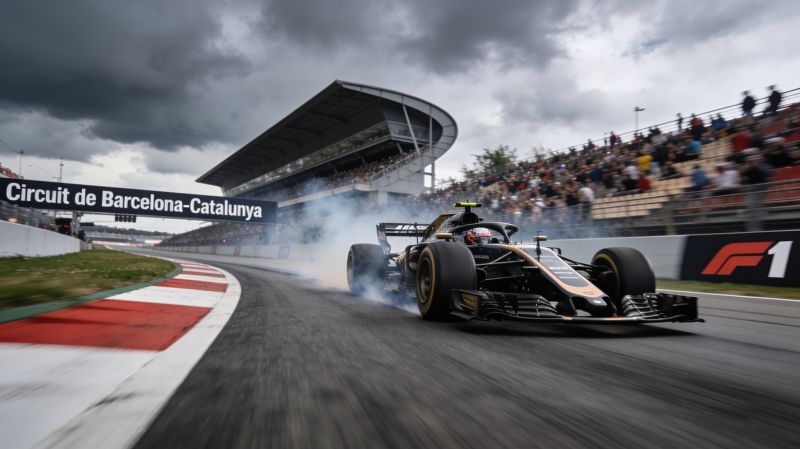
he F1 Spanish Grand Prix has long been a litmus test for car performance. The Circuit de Barcelona-Catalunya, with its mix of high-speed corners and technical sectors, exposes every weakness. I remember watching the 2023 race, where Max Verstappen's Red Bull sailed through Turn 3 while others struggled for grip. That weekend。tire management decided the podium. The Spanish Grand Prix isn't just another race—it's a physics lesson at 300 km/h.
Overtaking here is notoriously difficult. The long straight into Turn 1 offers the best chance, but only if a driver exits Turn 16 perfectly. In 2022, Lewis Hamilton's late charge on fresh softs nearly caught Carlos Sainz—a rare sight. Teams often gamble on strategy: two stops versus three。or a bold early pit. The F1 Spanish Grand Prix rewards patience and precision, not brute force.Track evolution is massive. Friday's dusty surface becomes rubbered-in by Sunday, shifting balance. I've seen engineers tweak front wings overnight。chasing tenths. The 2024 race saw McLaren's Lando Norris split the Ferraris, a testament to setup bravery. Wind direction matters too—a tailwind through Turn 9 can unsettle a car's rear. Small details, big consequences.For fans。the F1 Spanish Grand Prix is a pilgrimage. Barcelona's circuit is accessible, the city vibrant. But the racing?
Sometimes processional. That's why the 2021 battle between Verstappen and Hamilton felt electric—two stops, a late safety car, and a final dash. You could feel the tension in the grandstands. It's races like that which keep the Spanish Grand Prix relevant.Looking ahead, the 2026 regulation changes might shake up the order. Will Barcelona still favor aero efficiency?Probably. The F1 Spanish Grand Prix remains a barometer—teams learn where they stand. I'll be watching Turn 5 closely;
it's where champions separate from the rest.